

Transparent Local Accounting:
Keeping Houston from Going Broke

Strong Towns Are Resilient.
Strong Towns emphasizes economic resiliency. Cities are resilient when they invest in their most productive areas. Compact, walkable/bikeable, and safer neighborhoods are the most resilient, valuable places that need investment.
Fixing Houston, the Poster Child of the Suburban Experiment.
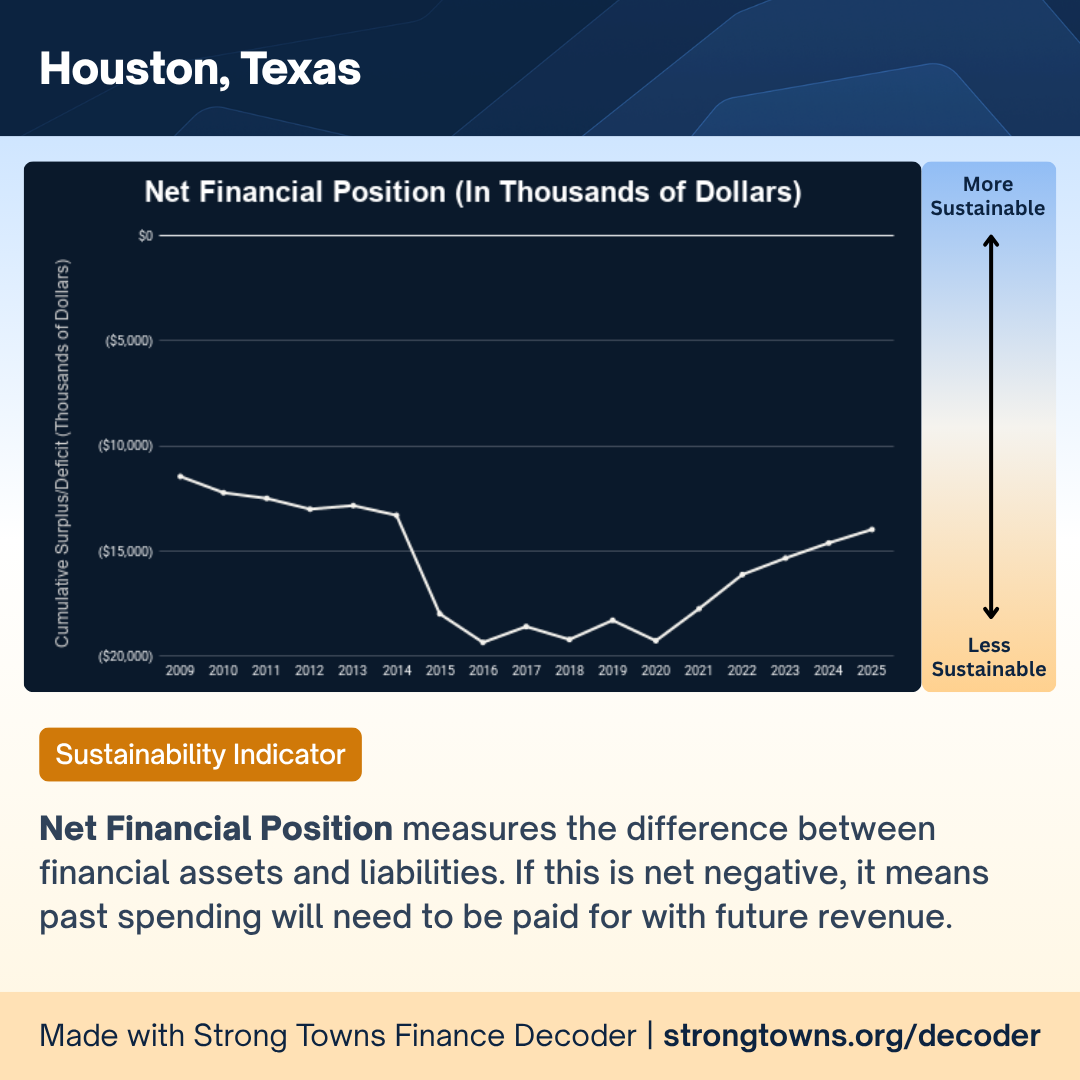
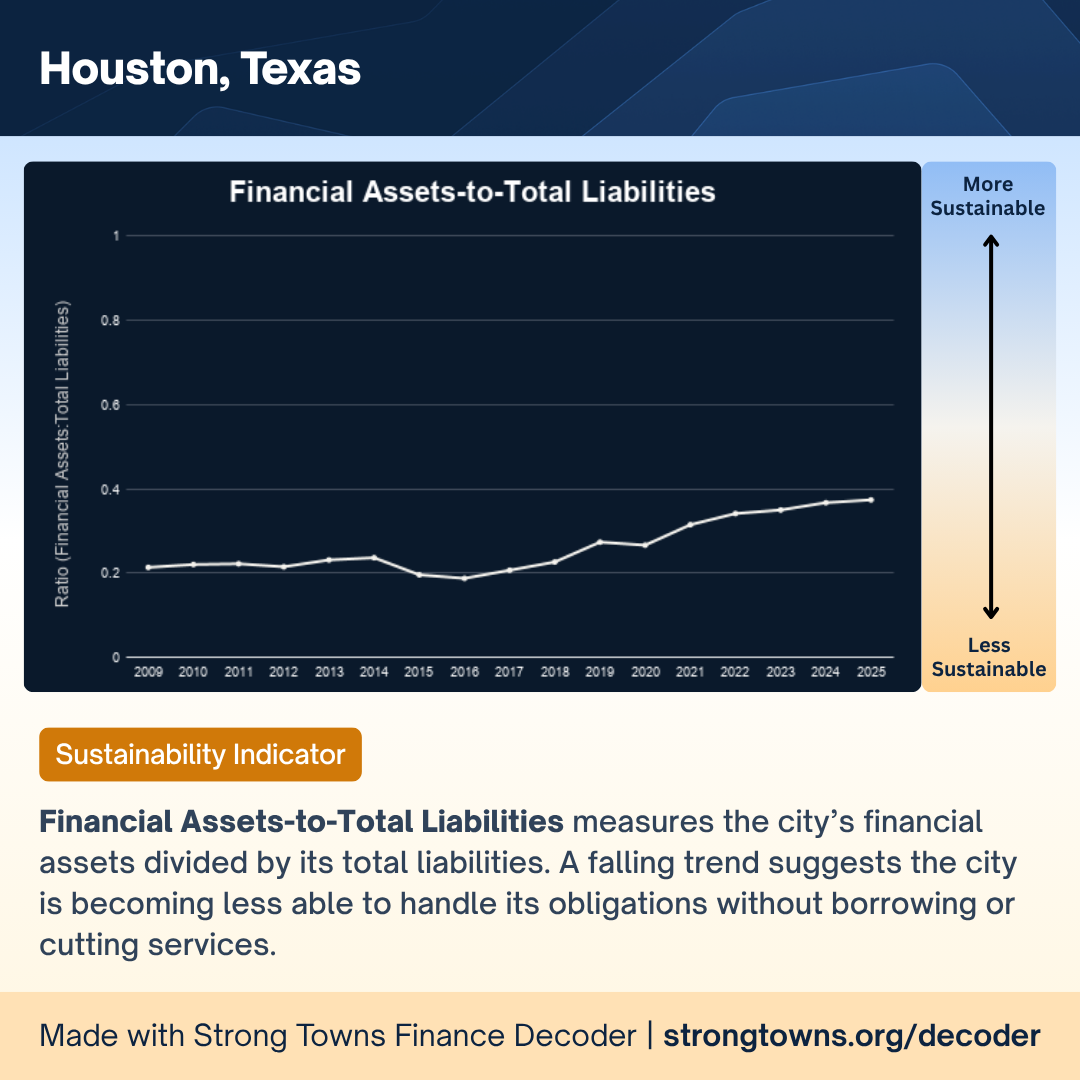
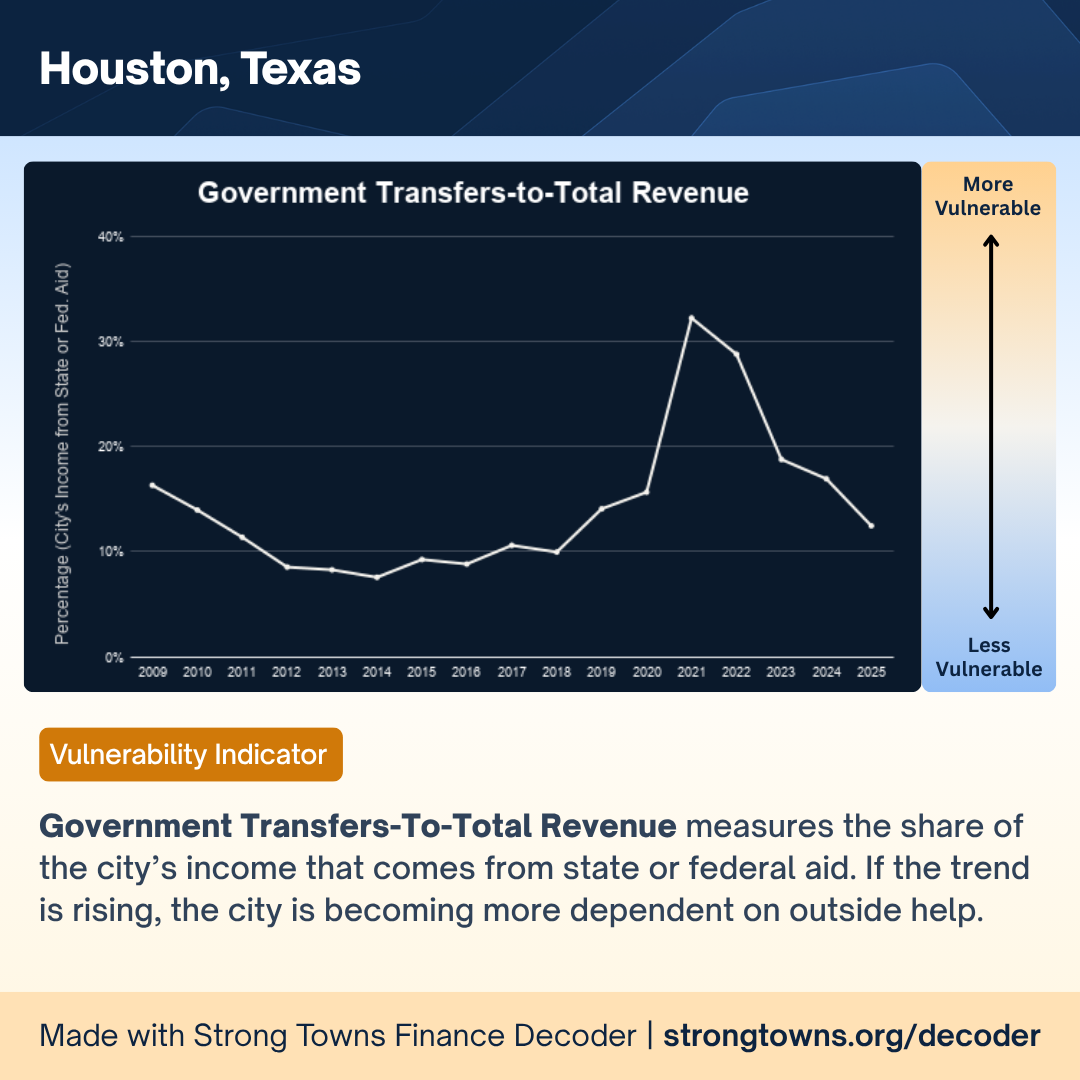
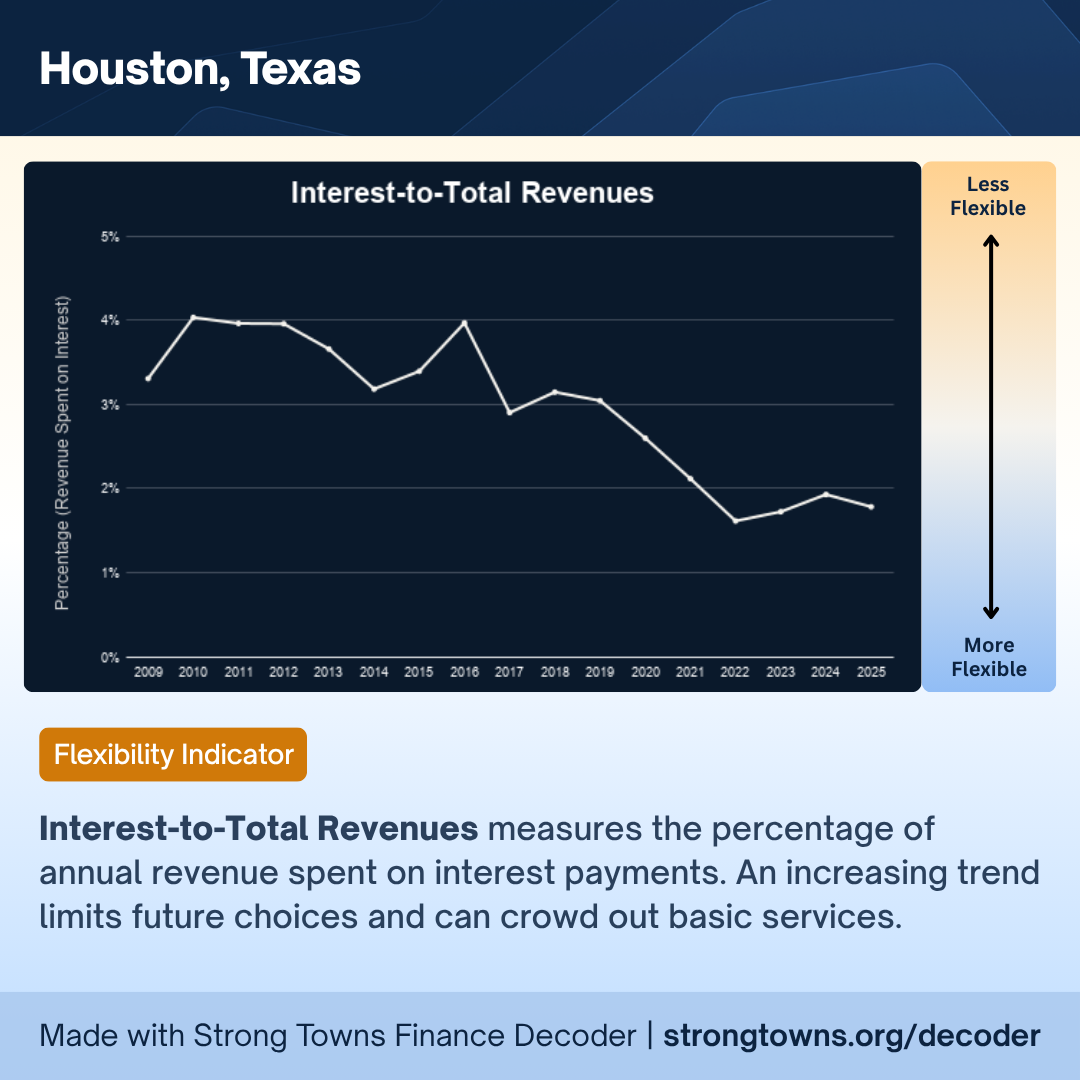
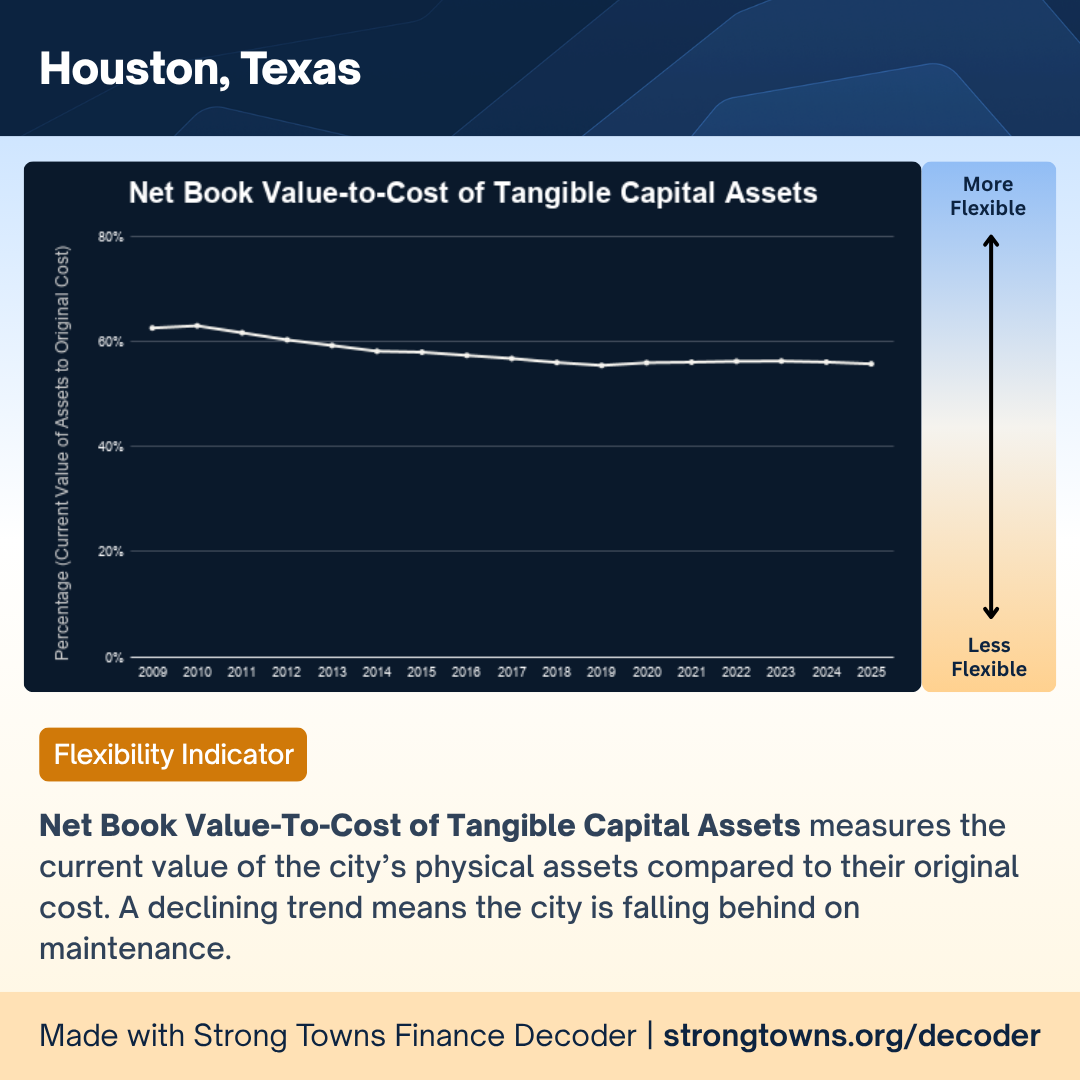
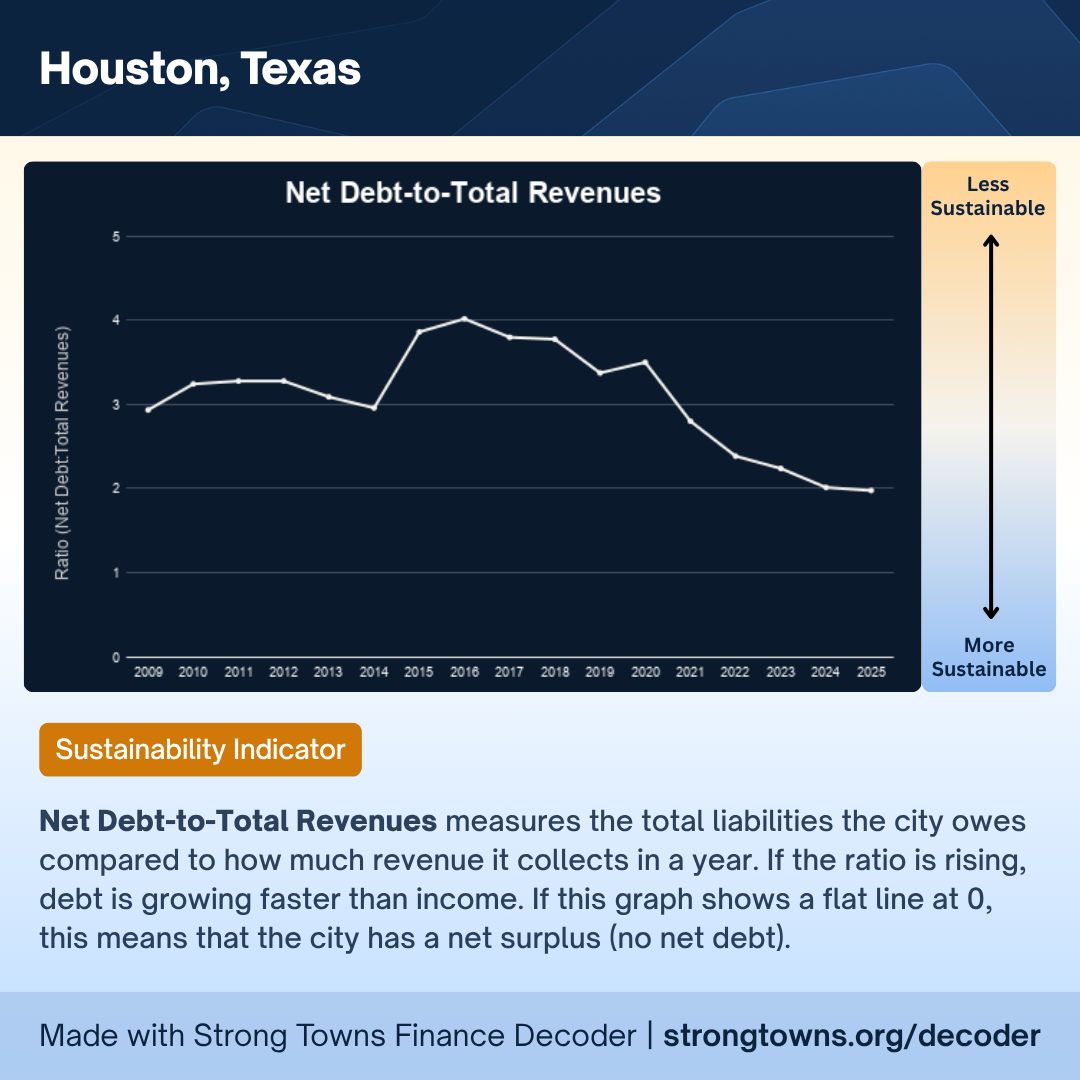
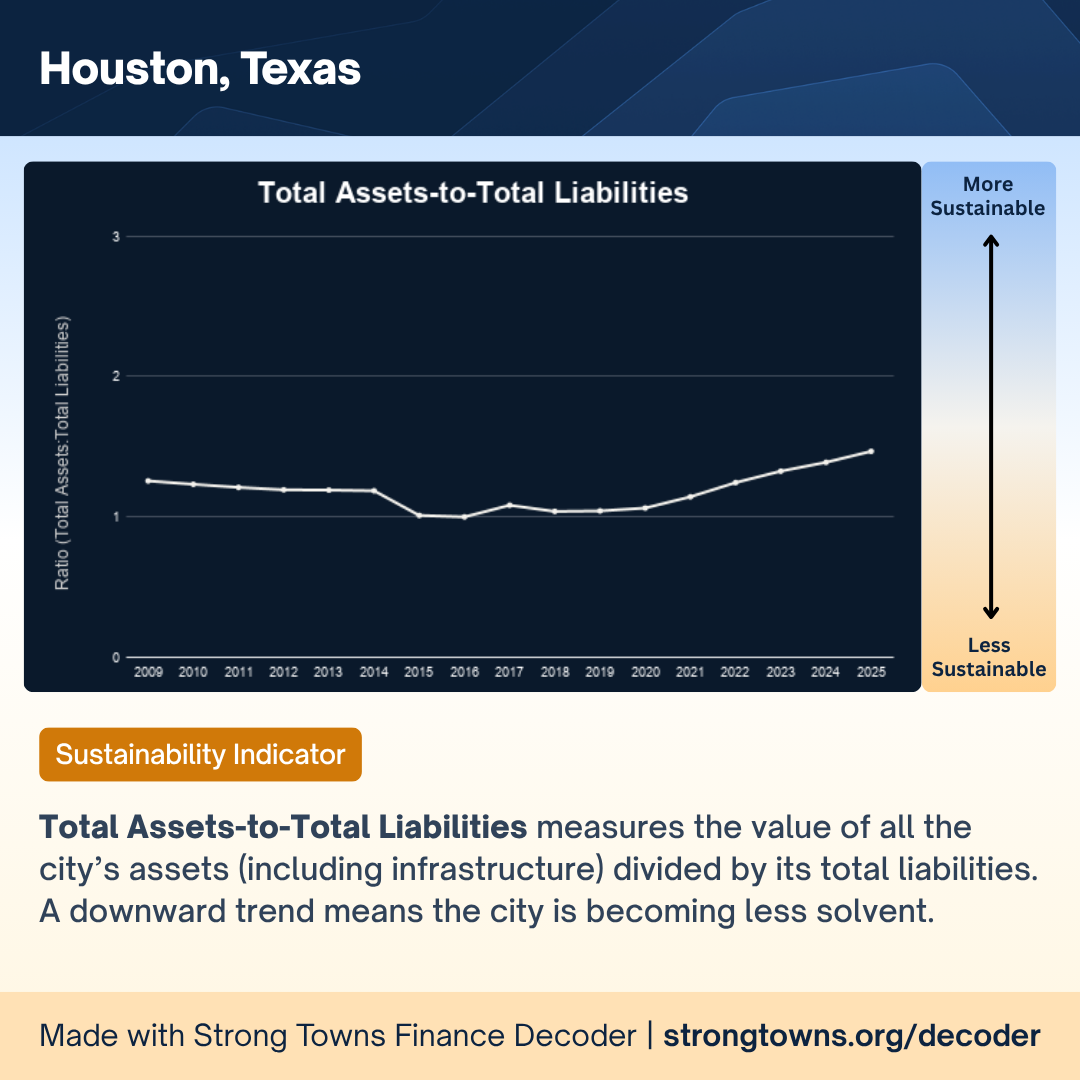
Generations of growth under the Suburban Experiment left Houston broke and hollow. Thanks to the Finance Decoder, we can see the damage and start building stronger, more fiscally resilient commmunities.
6 Principles of a Strong Houston
-
The goal of a town or city is to endure. To do that, cities have to be solvent. In fact, solvency must become an absolute obsession for communities. At minimum, this means having more assets than liabilities, and an ability to pay our debts.
-
For many towns and cities that weren’t built next to a large body of water (ocean, major river, etc.) or haven’t experienced a sudden, dramatic change in topography, the supply of land might seem limitless. But that just isn’t true. Land is a finite resource and, as the literal foundation of a community’s success, it has to be stewarded well. We must use the land we have productively.
-
A community getting serious about solvency and more productive land use will soon find itself thinking differently about transportation. One example is with our network of roads and streets. If streets are liabilities rather than assets, then we need to be even more discriminating about if, when, where, and how we build or expand them.
-
The temptation is understandable: chase after new jobs and new growth, at almost any cost. But this approach can lead to a “race to the bottom,” with different cities competing to see who can give away the most stuff—in the form of tax breaks and other incentives—to a big employer looking to move or expand. It can also tempt cities to “chase smokestacks” by expanding infrastructure and subsidizing new development in the hopes that, “If we build it, they will come.”
A Strong Towns approach to economic development looks less like big-game hunting and more like gardening. If you build a strong town using the principles laid out here, employers (and prospective employees) will beat down the door to move there.
-
Jane Jacobs described neighborhoods as co-creations, writing, “Cities have the capability of providing something for everybody, only because, and only when, they are created by everybody.”
Places endure when residents assume ownership of their cities. This is quite different from the passive role conventionally played by residents.
-
Local government isn’t the implementation arm of state and federal policies. Yet too often, local government finds itself looking up the “food chain” for money and direction.
But that’s not how Strong Towns views local government. In the Strong Towns approach, local government—a “collection of us”—re-orients toward people, toward the needs of residents, in a posture of service. It relates to the state and federal governments first and foremost as advocates for its residents.